


{{serverconnectlatestnews.data.showlatestnews.data[0].news_title}}
{{serverconnectlatestnews.data.showlatestnews.data[0].news_date.formatDate("d MMM yyyy")}}
{{serverconnectlatestnews.data.showlatestnews.data[0].news_teaser}}

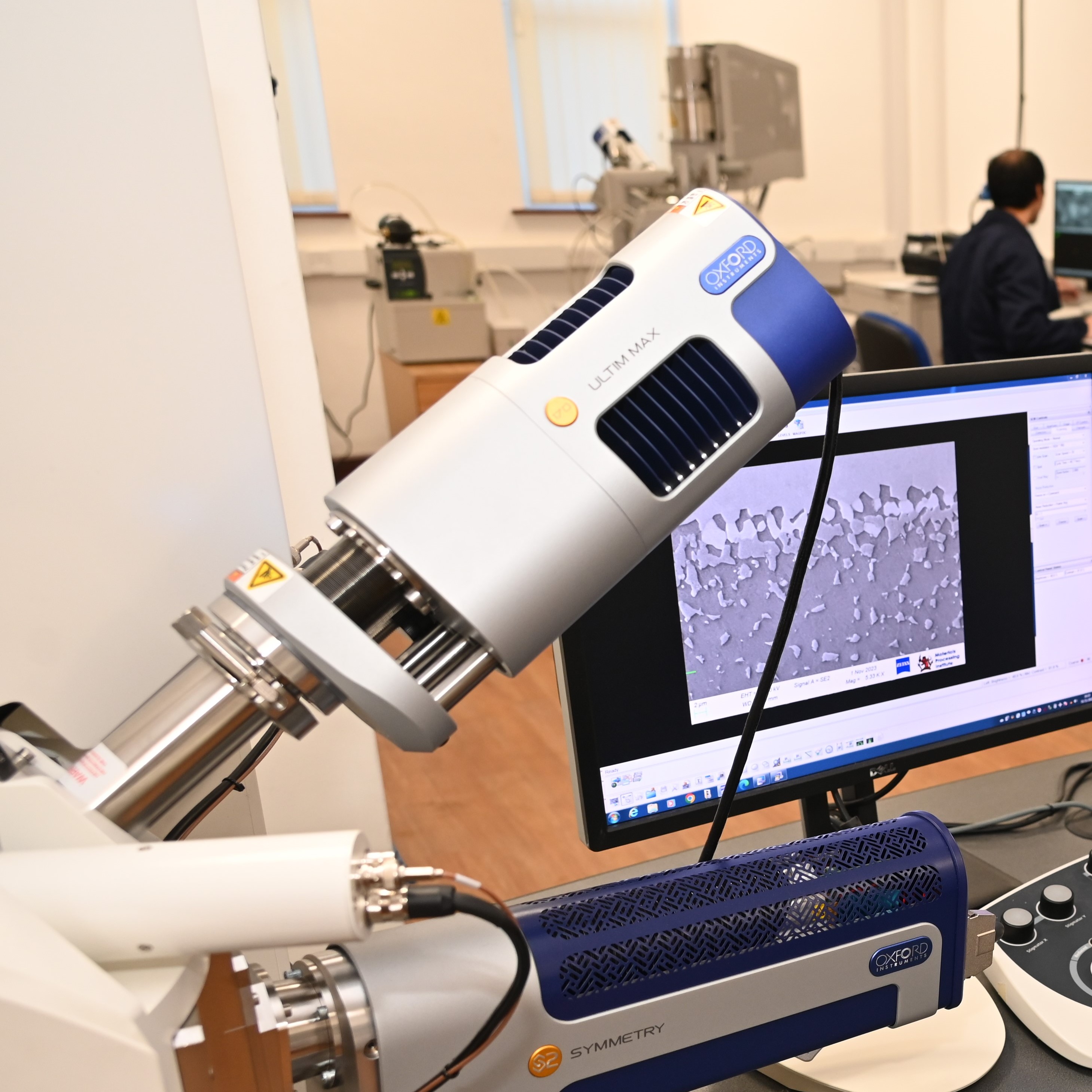
The internal quality of cast products is assessed against quality standards as any imperfections can lead to defects in the finished products. We were asked to assess a defect found on sulphur printing and follow-up dye penetrant testing.
A cross section was taken through the defect in the as-received sample, and this was prepared for assessment by light optical microscopy and scanning electron / energy dispersive spectroscopy (SEM-EDS).
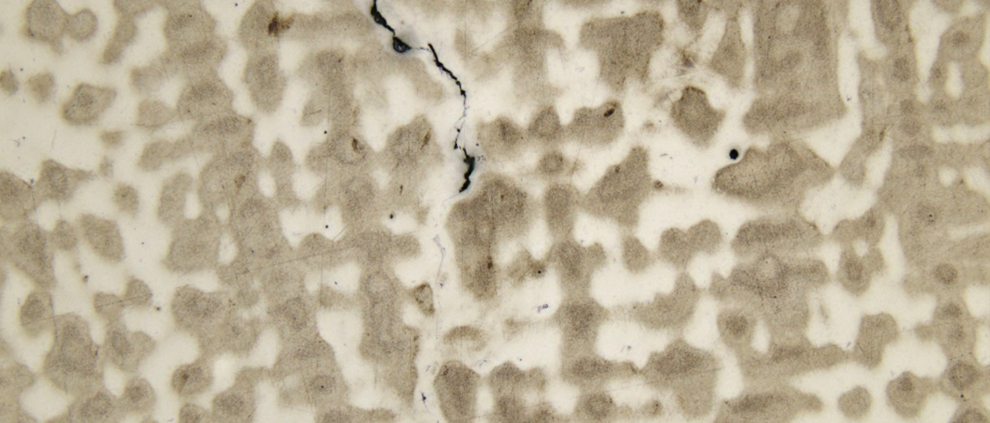
Cracks observed using Light Optical Microscopy

SEM-EDS of a crack indicated high levels of niobium and molybdenum
https://www.mpiuk.com/research-development advanced-materials-characterisation-centre.htm
Enquire about services, facilities, and expertise.
Materials Processing Institute is registered in England with registered No. 08919614
Registered Office: Materials Processing Institute, Eston Road, Middlesbrough TS6 6US
© Copyright Materials Processing Institute
Terms & Conditions / Terms & Conditions of Metal Sales / Website Terms & Conditions / Privacy Policy / Cookies Policy / Data Protection Notice / Site Map
Website by VIA Creative