


{{serverconnectlatestnews.data.showlatestnews.data[0].news_title}}
{{serverconnectlatestnews.data.showlatestnews.data[0].news_date.formatDate("d MMM yyyy")}}
{{serverconnectlatestnews.data.showlatestnews.data[0].news_teaser}}

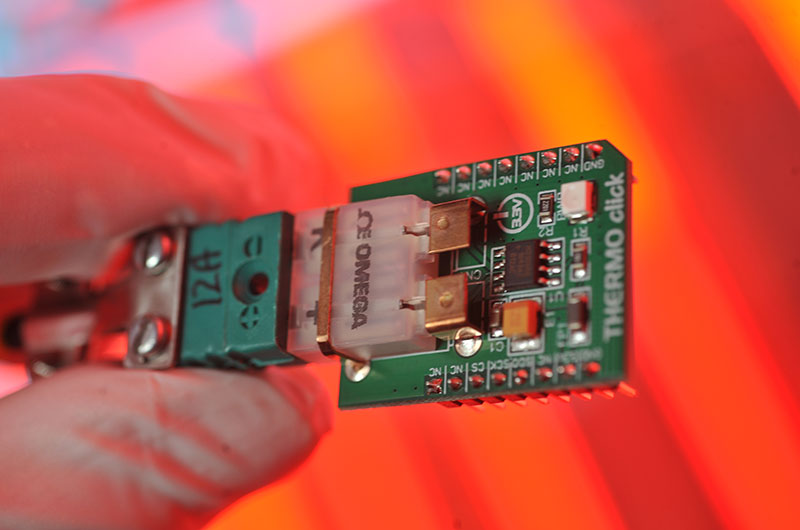
Modern industrial furnaces—whether in steel, glass, ceramics or petrochemicals—demand precise, real time temperature monitoring to safeguard product quality, extend asset life and enhance safety. Traditional hard-wired thermocouples are costly to install, prone to interference and offer limited flexibility. This case study presents a modular, wireless sensing solution that can be adapted to virtually any furnace environment, leveraging low-power wide area networks (LPWAN) and private cellular options to deliver actionable temperature data up to 1,200 °C.
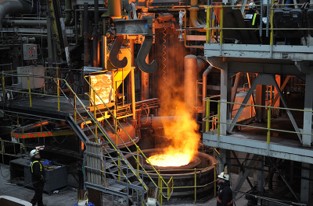
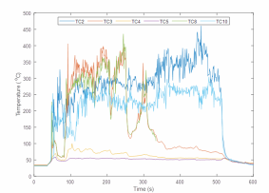
For operations requiring higher data rates, mobility or ultra low latency (e.g., advanced control loops, video diagnostics), a closed-loop LTE or 5G network can be deployed alongside LPWAN:
| Benefit | Impact |
|---|---|
| Reduced CAPEX/OPEX | Eliminates trenching and cabling; battery-powered nodes lower power costs. |
| Flexibility & Scale | Add, move or replace sensors in hours; supports dozens of nodes per furnace. |
| Improved Uptime | No physical cabling failures; robust RF links through EMI zones. |
| Enhanced Safety | Remote monitoring removes personnel from hazardous zones; instant alerts on excursions. |
| Data-Driven Control | Continuous streams feed dashboards and control systems, enabling tighter thermal profiles and energy savings. |
By decoupling sensor installation from hard-wired constraints and embracing hybrid wireless architecture - LPWAN for basic telemetry plus private 4G/5G for advanced applications—plant operators gain unprecedented visibility into furnace performance. This modular approach drives immediate cost savings, boosts asset life and lays a scalable foundation for Industry 4.0 ambitions across any high-temperature process.
Enquire about services, facilities, and expertise.
Materials Processing Institute is registered in England with registered No. 08919614
Registered Office: Materials Processing Institute, Eston Road, Middlesbrough TS6 6US
© Copyright Materials Processing Institute
Terms & Conditions / Terms & Conditions of Metal Sales / Website Terms & Conditions / Privacy Policy / Cookies Policy / Data Protection Notice / Site Map
Website by VIA Creative