Project - Recovery of Valuable Metals from Steel Mill Dust
This project has demonstrated methods to recover valuable metals from steel mill dust (SMD), helping the steel industry move towards more sustainable and resource-efficient production.
Addressing the Challenge
Zinc accumulation is an issue in the iron and steelmaking sector. It enters the process through both iron ore processing and the recycling of scrap and waste materials. Once the concentration of zinc goes beyond a certain point, the material is no longer suitable for iron recovery as high zinc content leads to poor processing.
At the same time, zinc- and iron-rich by-products generated during steelmaking is an issue and methods to reduce and process these in an economically viable way are needed.
Exploring Technology Solutions
The project investigated a range of treatment technologies to look at opportunities to reduce zinc content of steelmaking by-products. These included:
• Physical processing methods
• Hydrometallurgical techniques
• Pyrometallurgical treatment
• Combined treatment processes
Through these methods, the most effective routes for removing zinc while maintaining economic viability were assessed.
Key Project Activities
The research programme involved detailed technical investigation and economic analysis, including:
• Characterisation testing of steel mill dust samples
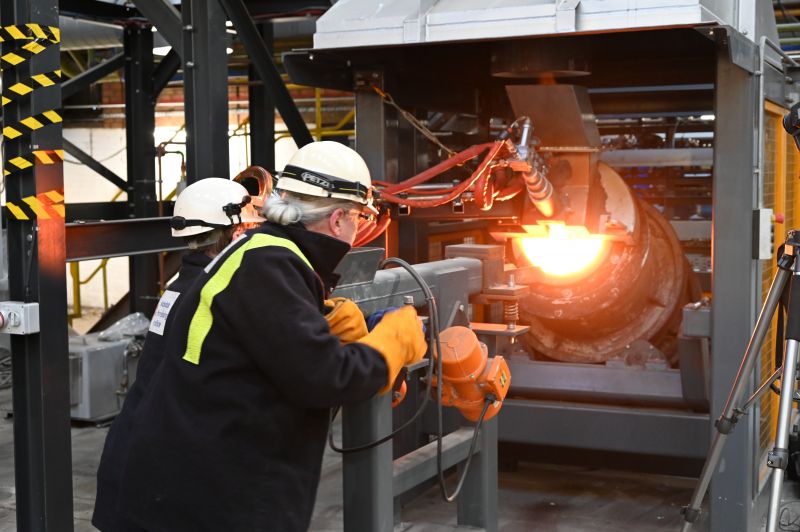
• Calcination trials in different furnaces and varying process conditions
• A comprehensive techno-economic assessment comparing the available zinc removal technologies
Technical Results
The study achieved significant technical success, removing more than 90% of zinc from steelmaking dusts.
Analysis also confirmed that pyrometallurgical processing remains the most developed and economical method for de-zincification. However, the economic viability depends on feedstock quality requiring either high zinc content or a hybrid approach that enables recovery of iron in the dust.
The techno-economic assessment provided valuable insight into the potential for scaling up de-zincification technologies. Findings suggest that hybrid processing routes could offer an effective way to optimise the recovery of both zinc and iron.
Although the pyrometallurgical treatment, consumed energy, the LCA analysis demonstrated that the associated trade-off is justified from an environmental perspective.
Next Steps
This project has highlighted benefits from additional work to continue advancing these technologies, including:
• Additional economic assessments of hydrometallurgical and ultra-cavitation processes
• Industrial-scale validation of promising technologies
• Optimisation of energy efficiency
• Refinement of economic models for large-scale implementation
Together, these could help demonstrate more sustainable ways for managing steel mill dust and recovering critical metals within the steel industry.
Link to Case Study - https://www.mpiuk.com/case-study-recovery-of-valuable-metals-from-steel-mill-dust.htm
17 March 2026